Market Insights·28 October 2026·7 min read·Altai Capital
Fed holds at 3.75%-4% as Cook and Hammack dissent in favour of a hike
A 10-2 vote kept policy unchanged six days before the midterms. The statement dropped September's tightening language but promised to deliver price stability, and investors still expect a December hike.
- QQQ
- SPY
| Ticker | Company | Wed 28 Oct | × usual day | Since 30 Sept close |
|---|---|---|---|---|
| QQQ | Invesco QQQ Trust | +0.6% | 0.7× | −1.9% |
| SPY | State Street SPDR S&P 500 ETF Trust | +0.3% | 0.7× | +1.3% |
Prices as of the close on Wed 28 Oct.
A hold with two hawkish dissents
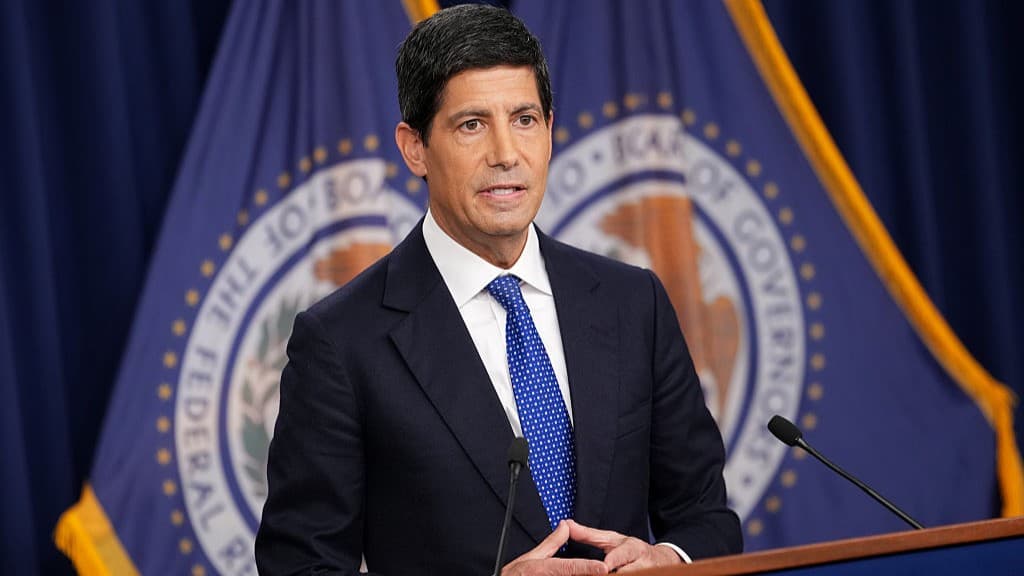
The Federal Open Market Committee left the federal funds target range at 3.75% to 4% on Wednesday 28 October by a 10-2 vote. Governor Lisa Cook and Cleveland Fed President Beth Hammack dissented. Both wanted a quarter-point rise.
The statement changed in three ways that matter. It described economic activity as expanding at a strong pace, where September's statement had called the pace solid. It said productivity growth is strong and capital investment robust. On inflation, it said prices remain elevated and that the accumulation of more information will help the committee set the stance needed for a timely return to 2%. That sentence replaced September's line saying the hike would support a timelier return to target. The closing sentence, that the committee will deliver price stability, was kept.
At the press conference, Chair Kevin Warsh presented the decision as a pause to see how September's hike was feeding through. He said the overwhelming judgement on the committee was that the monetary medicine was starting to work. Financial conditions had tightened, he said, but he would not describe them as tight. He gave no guidance on December, said he does not submit a dot, and said politics played no role in the timing ahead of the 3 November midterms.
Warsh also announced a change to the meeting calendar. The FOMC will still meet eight times a year, but one meeting next autumn will deal only with monetary policy strategy and will not produce a policy statement. Two meetings will be set aside for strategy the year after. That cuts the number of rate-setting meetings to seven in 2027 and six in 2028.
How we got here
In September the Fed raised rates for the first time since 2023, and the first time under Warsh. Inflation has kept rising since then. Consumer prices were up 3.7% on a year earlier in September, driven by gasoline, with WTI crude around $100 a barrel while the US-Iran war goes on. Core inflation rose to 2.6% and came in above forecasts.
Hammack had made her position public before the meeting. She argued that policy was not restrictive enough and that more tightening was needed, and she had already dissented in favour of a hike in July. Her vote was expected. Cook's was not. Previews had named Hammack, Lorie Logan and Neel Kashkari as the most likely dissenters, and Cook had never dissented in her four years on the Board. Her vote moves the case for a hike from a regional president to a sitting governor.
Futures had priced out an October move well before Wednesday, and the argument had already moved on to December. Treasury Secretary Scott Bessent said after the meeting that the economy is facing an energy supply shock and that the Fed should keep an open mind about whether such shocks are transitory. He added that he and President Trump have confidence in Warsh.
How the market took it
The decision itself barely moved equities. Stocks swung during the session and closed slightly higher, a move well inside the usual daily range of both funds. The 10-year Treasury yield rose four basis points to 5.03%. It had been as high as 5.35% in recent weeks before falling below 5% last week. DoubleLine's Jeffrey Gundlach noted that the yield curve steepened during the press conference.
The main equity event of the period came six days earlier and had little to do with the Fed. On Thursday 22 October, the Invesco QQQ Trust (QQQ) fell 2.9%, about 3.9 times its usual daily move. The State Street SPDR S&P 500 ETF Trust (SPY) fell 1.2%, about 2.6 times its usual move. Earnings from Meta revived worries about AI spending and the cost of capital, and semiconductors and the hyperscalers led the fall. For index products of this size, those are repricing-sized days.
The funds then recovered. Over the period QQQ gained 1.1% and SPY 0.4%, while small caps (IWM) rose 2.0%. Since the end of September, QQQ is down 1.9% and SPY up 1.3%. That gap shows the cost of higher long-term yields falling mostly on long-duration technology rather than the broad index.
On December, Polymarket put the probability of a quarter-point hike at 82% after the announcement, up from about 77% before it. The meeting confirmed expectations rather than changing them.
What it means for each fund
For SPY, the hold changes little in the near term. The broad index has made gains since September despite the September hike and a 10-year yield near 5%. Warsh's description of strong growth and robust investment supports earnings. The risk is that he made no commitment either way, which keeps the index sensitive to each inflation release before December.
QQQ is more exposed. Its weighting towards mega-cap technology makes it the more rate-sensitive of the two, and the 22 October sell-off showed how closely investors now link AI spending to the cost of capital. A Fed that calls financial conditions not tight is signalling it is comfortable with yields where they are. For companies funding large capital budgets, that is not reassuring. The next test came straight after the close, when Microsoft and Alphabet were due to report.
The outperformance of small caps over the period is notable given that a December hike is still priced. It suggests investors are spreading out from the most crowded technology names rather than leaving equities.
What would change the picture
The September PCE report on Thursday 29 October is the first test. A hot core reading would firm up December pricing and could push the 10-year back towards its recent highs. A soft reading would give weight to the view, now held by Bessent, that the energy shock may fade on its own.
The midterms on 3 November remove one source of uncertainty around the Fed's timing. The October jobs report and October CPI then come before the December meeting, where new projections will show how many committee members agree with Cook and Hammack. More dissents in December, or a hike with dissents in favour of holding, would show how divided the committee is.
Oil remains the swing factor. A diplomatic settlement in the Middle East that lowered crude would ease the headline inflation behind the hawkish votes. A further rise would make it harder for the majority to keep waiting.
The names
- State Street SPDR S&P 500 ETF Trust (SPY): The broad index gains from the Fed's description of strong growth and robust investment, but with no guidance on December it stays exposed to each inflation release before then.
- Invesco QQQ Trust (QQQ): The heavy weighting towards mega-cap technology makes the fund the more exposed to a Fed that is comfortable with a 10-year yield near 5%, at a time when investors are already questioning the return on AI spending.
Our read
New or repeat: New stage of a running story. The hold was expected, but it is the next stage of the hiking cycle that began in September, and a governor's dissent in favour of a hike widens the hawkish camp beyond the regional presidents.
Substance: High. This is a formal policy decision with a revised statement, two dissents and a change to the FOMC calendar, even though the rate itself did not change.
Market reaction: Muted. Both funds ended decision day slightly higher, within their usual daily moves, because the hold and the expected December hike were already priced; the bigger moves of the period came from AI earnings on 22 October.
Theme: The meeting belongs to the higher-for-longer rates theme, which now overlaps with doubts about AI spending, so long-duration technology carries more of the rate risk than the broad index.
What to watch
- 29 Oct: September PCE inflation report, the first test of December hike pricing
- 3 Nov: US midterm elections
- Early November: October jobs report
- Mid-November: October CPI, the last major inflation reading before December
- December FOMC: Rate decision with new economic projections and dot plot; watch the dissent count
Sources: Federal Reserve issues FOMC statement (28 October 2026) · Fortune: Fed holds rates steady days before the midterms, even as inflation runs hot · CNN: Fed keeps interest rates unchanged, but two officials dissented in favor of a rate hike · Fox Business: October FOMC, Federal Reserve holds rates steady ahead of election · The Bond Buyer: Munis stay quiet as Fed holds rates · Newsquawk: Warsh says monetary medicine is starting to work · Newsquawk: Bessent says Warsh should have an open mind on supply shocks · Benzinga: Fed holds rates as December hike odds hit 82% · CNBC: Fed meeting recap · Reuters via Yahoo Finance: S&P 500, Nasdaq end sharply lower as revived AI doubts ignite tech selloff · Kiplinger: October 2026 Fed meeting live updates
This note is published for informational purposes only and is not investment advice or a recommendation to buy or sell any security. The author may hold positions in securities discussed. See the full disclaimer in the footer.
Keep reading
 Markets
1 November 2026 · 5 min read
Futures positioning, week of 27 October
Where the big speculators are crowded, what changed this week, and how to read it.
Read more Markets
25 October 2026 · 5 min read
Futures positioning, week of 20 October
Where the big speculators are crowded, what changed this week, and how to read it.
Read more Research Summit
11 October 2025 · 2 min read
$NTGR, Netgear Inc. - Likely Regulatory Tailwinds
Netgear represents a compelling opportunity to capitalize on potential U.S. regulatory action against Chinese router manufacturer TP-Link, which commands 65% of the U.S. market.
Read more