Market Insights·5 November 2026·10 min read·Altai Capital
Democratic sweep knocks 8% off oil, lifts gold; December Fed hike stays priced
Investors took control of Congress as a sign that the Iran war could end sooner. That cut oil's war premium and pulled long-dated yields lower. But the December FOMC meets before the new Congress sits, and on the evidence so far short-dated rates barely moved.
- GLD
- USO
- XLE
- SLV
- SPY
- QQQ
| Ticker | Company | Wed 4 Nov | × usual day |
|---|---|---|---|
| USO | United States Oil Fund, LP | −8.1% | 3.2× |
| XLE | State Street Energy Select Sector SPDR ETF | −4.7% | 2.5× |
| GLD | SPDR Gold Shares | +3.7% | 3.3× |
| SLV | iShares Silver Trust | +5.2% | 2.4× |
| SPY | State Street SPDR S&P 500 ETF Trust | +1.7% | 1.9× |
| QQQ | Invesco QQQ Trust | +1.0% | 0.7× |
| TLT | iShares 20+ Year Treasury Bond ETF | +0.8% | 1.0× |
*Wednesday 4 November was the first session after the news broke. × usual day is the move divided by the name's 14-day average true range before that session.
What the voters decided
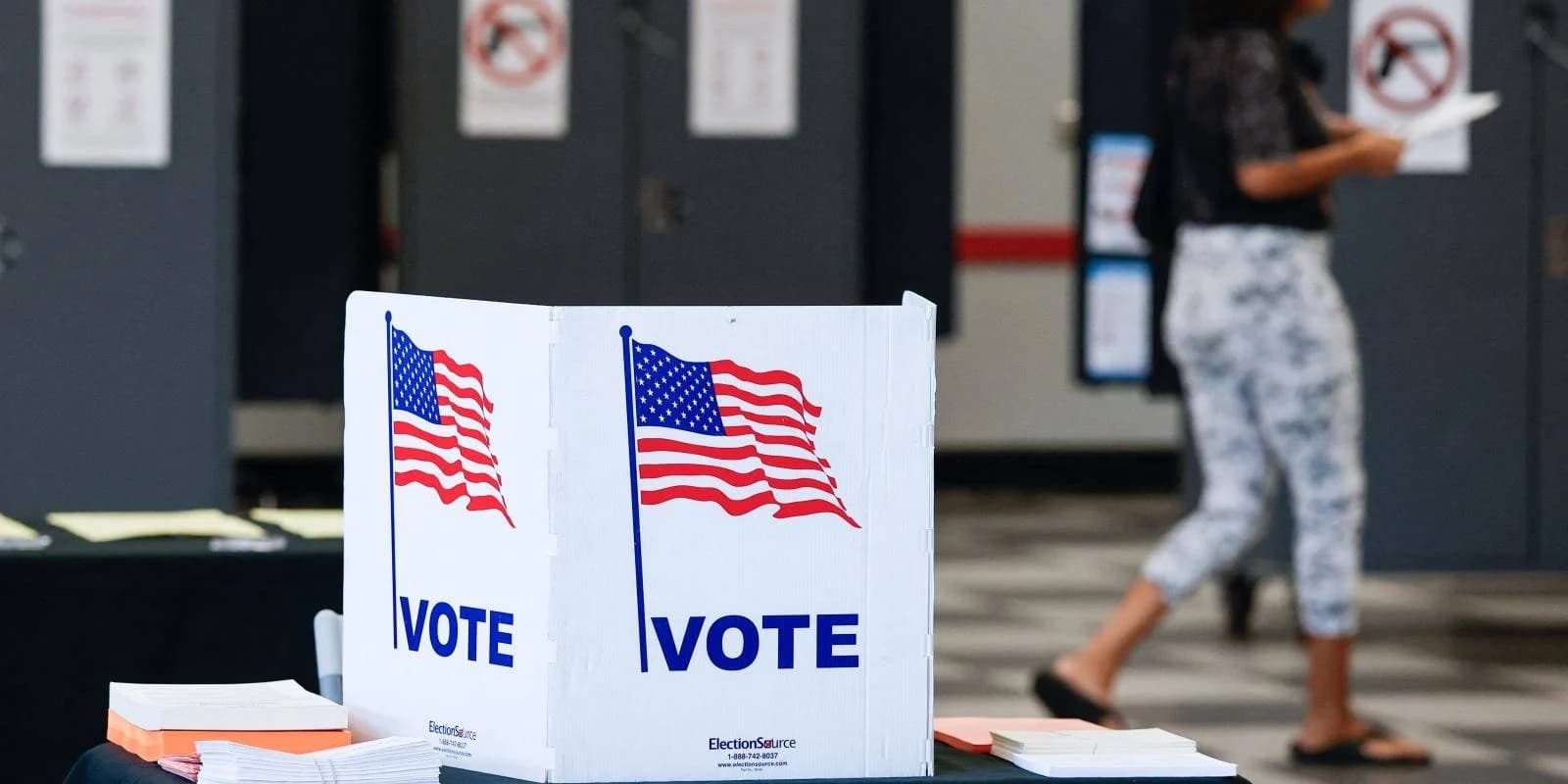
Democrats won control of both chambers of Congress in the 3 November midterms. They flipped seven Republican-held Senate seats, in Texas, Ohio, Iowa, Kansas, Maine, North Carolina and South Carolina. That gives them at least 54 seats, with Alaska and Mississippi still to be called. In the House they took nearly 30 districts, and Republicans had not flipped a single seat by Wednesday afternoon. Texas also elected a Democratic governor, Gina Hinojosa, who had campaigned for tougher limits on data-centre development.
The election became a vote on the war. On Wednesday the Senate Democratic leader, Chuck Schumer, said "we are going to end the war" with Iran. He pointed to Congress's power over federal spending and said some Republicans had already joined Democrats on the issue. Vice President JD Vance said the war was one reason for his party's losses. President Trump accepted the results, which took some uncertainty out of the session.
The timing matters for the December rate decision. The new Congress is not sworn in until 3 January. The Federal Reserve's last meeting of the year, on 8 and 9 December, comes before Democrats can use that power over spending.
How we got here
For the purposes of this angle, the story began on 16 September. That day the Fed raised its target range by a quarter point to 3.75%-4.00%, its first increase since 2023, and the median official pencilled in a second hike before the end of the year. Inflation had picked up because of the war with Iran, which began with US and Israeli strikes on 28 February. A memorandum of understanding in June did not stop attacks on shipping in the Strait of Hormuz. Annual inflation reached 3.7% in September.
On 28 October the Fed held rates, but two policymakers, Lisa Cook and Beth Hammack, dissented in favour of a hike. CME pricing put the chance of a December hike at about 88% before the decision and about 82% after Kevin Warsh's press conference. Oil set the tone in the meantime. Brent spent most of October between $110 and $114. On 8 October President Trump had said there would be no attack on Iran before the vote.
The days before the election were risk-off. On Friday 30 October the Invesco QQQ Trust (QQQ) fell 3.5%, 2.8 times its usual day, the SPDR S&P 500 ETF (SPY) lost 1.8% and the iShares Silver Trust (SLV) dropped 5.7%, as markets weighed the prospect of further rate rises. By the end of October, gold was down more than a quarter from its peak. Crude was already falling in the sessions before the vote, even after Washington confirmed limited strikes on Iran's Qeshm island on Monday 2 November.
How the market took it
Wednesday 4 November was the session that priced the result, and oil took the biggest hit. The United States Oil Fund (USO) fell 8.1%, 3.2 times its usual day. West Texas Intermediate fell 8.3% to settle at about $88.12, its biggest one-day drop since April. Brent closed below $100 for the first time since 7 October, at its lowest settlement since 31 August. The Energy Select Sector SPDR (XLE) fell 4.7%, 2.5 times its usual day. That was a smaller fall than crude's, as you would expect when producers are valued on prices further out.
Precious metals moved the other way. SPDR Gold Shares (GLD) rose 3.7%, 3.3 times its usual day, and gold climbed back above $4,000. SLV gained 5.2%. The dollar index touched its lowest since 30 September, and long-dated Treasury yields fell, with the 10-year near 4.9%, its lowest since 9 September.
Stocks rose, but not evenly. SPY gained 1.7%, close to twice its usual day, which is a large move for the index, and the Dow had its best day since April 2025. QQQ rose only 1.0%, below a normal day's range, and the technology sector fund was flat. Data-centre operators fell on concern that Democrats, now stronger in the main construction hubs of Texas and Georgia, would tighten scrutiny of the build-out. Money moved into consumer discretionary, financials, staples, real estate and health care, each up more than 3%, while defence fell 1.5%.
After Wednesday's close, oil was unchanged and gold added another 1.7% by Thursday's cut-off. QQQ slipped 0.6%. Nasdaq 100 futures were lower before Thursday's open as chip stocks extended their losses, though Qualcomm's results also weighed on the group that morning.
What it changes for December
The result works on rates through three channels. The first is oil. A lower war premium in crude feeds through to headline inflation and to inflation expectations. The second is fiscal policy. A divided government limits new tax and spending plans, which is good for bondholders at the long end. The third is the war itself, but Congress can only act on it after 3 January.
The cross-asset moves show the market pricing the first two channels and leaving the Fed's next step largely alone. The 20+ year Treasury fund (TLT) rose 0.8%, about one normal day. The dollar fell by a modest 0.4%. Before Thursday's open, the 2-year yield was flat at about 4.58% while the 10-year kept falling. Bloomberg reported that traders trimmed their bets on Fed hikes over the coming year. But the front end barely moving suggests December is still the market's base case.
That is consistent with how the Fed has framed the decision. With inflation at 3.7% and two dissents for a hike already on record, December depends on the October and November data, not on who controls Congress from January. Where the election matters more is 2027. If oil holds lower and the war winds down, the case for a second increase after December weakens, and the gridlock lowers the risk of a fiscal impulse that would have pushed the other way.
Oil, metals and equities
For crude and the energy producers, the drop removes part of a war premium that had built up over eight months. Supply itself has not changed. The president still runs the war until at least January, and the market has already had to price renewed strikes this month. Energy equities falling only about half as far as crude suggests some doubt about how lasting the drop will be.
Gold and silver rallied on a weaker dollar and lower long-dated yields, and both are rebounding from a sharp correction. Silver had given back more than half its value from a peak above $100 earlier in the year. If December's hike is confirmed, that would test how far the rebound can run.
In equities, the result split the market by sector. It favoured consumer, financial and health-care stocks, and lower fuel costs helped consumers. It worked against the AI infrastructure trade, which now faces both higher rates and political risk to data-centre permitting, and the Nasdaq 100 has underperformed the S&P 500 by about five points over the period.
What would change the picture
Four things would change this reading. Renewed US strikes or fresh Iranian attacks on shipping would rebuild the oil premium quickly, because Congress cannot constrain the war before January. Hot inflation or jobs data would harden the December hike and take away the support gold got from lower yields. A clear fall in short-dated yields would be the first sign that the market has started to doubt December. And if QQQ keeps falling over the next few sessions while the S&P 500 holds, that would confirm the market is treating the election as a lasting shift away from AI infrastructure rather than a one-day rotation.
The names
- United States Oil Fund, LP (USO): Front-month crude lost much of its Iran-war risk premium as the market bet that a Democratic Congress will push the administration towards an exit, though actual supply is unchanged.
- State Street Energy Select Sector SPDR ETF (XLE): Integrated producers and refiners face lower realised prices if the drop in crude lasts, but the shallower fall suggests investors doubt the war premium is gone for good.
- SPDR Gold Shares (GLD): Gold benefits from a weaker dollar and lower long-dated yields, though a confirmed December hike would test the rebound.
- iShares Silver Trust (SLV): Silver is rebounding from a fall of more than half since its early-2026 peak, and it moves more than gold on changes in dollar and rate expectations.
- State Street SPDR S&P 500 ETF Trust (SPY): For the S&P 500, lower oil, a divided government and less election uncertainty support consumer, financial and health-care earnings, which offsets weakness in AI infrastructure.
- Invesco QQQ Trust (QQQ): The Nasdaq 100 is heavy in the AI capex chain, which now faces political risk to data-centre permitting on top of higher rates.
- iShares 20+ Year Treasury Bond ETF (TLT): Long Treasuries gain from lower oil-driven inflation expectations and fiscal gridlock, but they get little help from the Fed's near-term path.
- State Street Technology Select Sector SPDR ETF (XLK): Technology stocks did not join the relief rally because investors repriced the data-centre build-out for tighter oversight.
Our read
New or repeat: New. The midterm result is a new event: the first change in control of Congress since 2024 and the first political check on the Iran war.
Substance: High. An election that hands both chambers to the opposition changes who controls war funding, the scope for fiscal policy and regulatory oversight from January.
Market reaction: Mixed. Oil and energy fell, and gold and silver rose, by two to three times their usual days, while the S&P 500 gained almost twice its normal range and the Nasdaq 100 lagged with less than one.
Theme: The result hits two themes the market is trading, the Iran-war oil premium and AI infrastructure spending, and pre-market chip weakness on Thursday suggests the second is losing momentum.
What to watch
- Coming days: Calls in the Alaska and Mississippi Senate races, which settle the size of the Democratic majority
- Mid-November: October CPI, the first inflation print after the September hike
- FOMC decision, 9 Dec: Whether the Fed delivers a second hike, and what its projections signal for 2027
- 3 Jan: New Congress sworn in; first chance for Democrats to use their control of spending against the Iran war
Sources: 2026 midterm election results: Who won the key House and Senate races? (Northeastern Global News) · Democrats flip dozens of GOP seats. Republicans haven't flipped a single one (CNBC) · Democratic Party wins US Senate in 2026 midterm elections (Al Jazeera) · Schumer: Democrats will end Iran war (Egyptian Gazette) · Chuck Schumer heralds Democrats' 'generational remake' of Senate (NPR) · Oil prices drop below $100 as midterms fuel hope for an end to the Iran war (NBC News) · Oil Plunges as Election Shifts Iran Outlook (Rigzone/Bloomberg) · Brent oil slides to $94 on Iran uncertainty after US midterms (The National) · Oil prices plunge after Vance post on Iran war (Axios) · Treasuries Gain as Oil Prices Tumble After Democrats Elected (Bloomberg) · Treasury yields continue to fall after midterms (CNBC) · Financial & Forex Market Recap: Nov. 4, 2026 (Babypips) · Gold and silver surge as Democratic midterm sweep drives dollar, yields lower (Kitco) · The dollar decides: What the midterm rally in gold and silver says about the next turn (Kitco) · Stock market news for Nov. 4, 2026 (CNBC) · AI data center stocks and Musk's SpaceX decline as Texas governor result raises risks (CNBC) · AI data-center stocks slide, renewables rally after Democratic US midterm sweep (Reuters via The Star) · Stock Rotation Rolls On as Chipmakers Retreat: Markets Wrap (Bloomberg) · US Stock Futures Mixed After Midterm Elections as Qualcomm Falls (Yahoo Finance) · US Fed raises interest rates for first time in three years (Al Jazeera) · Rate decision live: Interest rates held steady in split vote (Yahoo Finance) · Much ado about nothing? Fed chair Warsh talks up a storm but December rate hike bets barely budge (investingLive) · What to expect from the Fed as Warsh weighs hot inflation, oil and US midterms (Euronews) · Oil falls to $103 as Trump says US will not attack Iran before the midterm elections (Yahoo Finance) · 2026 Iran war (Britannica)
This note is published for informational purposes only and is not investment advice or a recommendation to buy or sell any security. The author may hold positions in securities discussed. See the full disclaimer in the footer.
Keep reading
 Markets
1 November 2026 · 5 min read
Futures positioning, week of 27 October
Where the big speculators are crowded, what changed this week, and how to read it.
Read more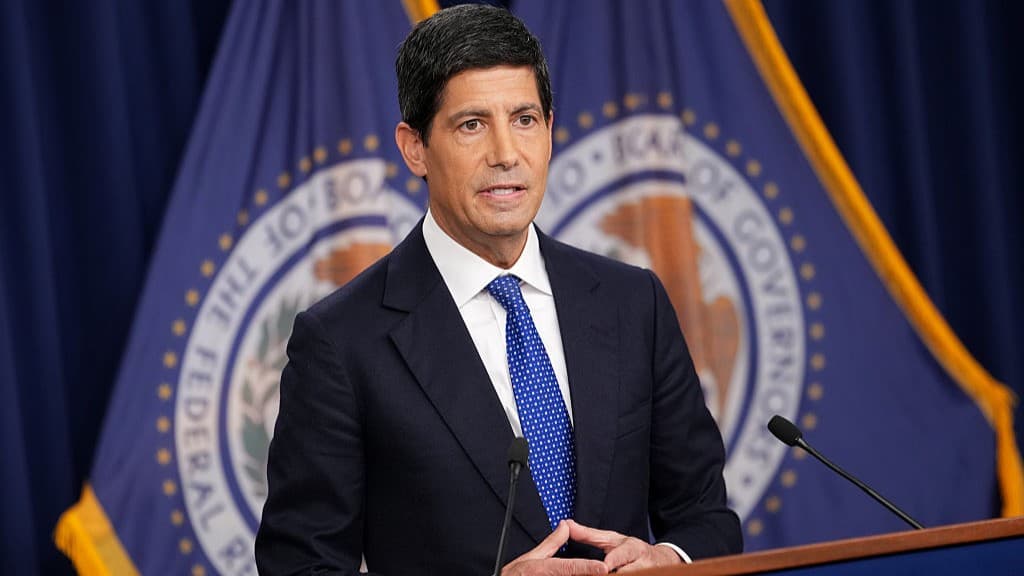 Markets
28 October 2026 · 5 min read
Fed holds at 3.75%-4% as Cook and Hammack dissent in favour of a hike
A 10-2 vote kept policy unchanged six days before the midterms. The statement dropped September's tightening language but promised to deliver price stability, and investors still expect a December hike.
Read more Markets
25 October 2026 · 5 min read
Futures positioning, week of 20 October
Where the big speculators are crowded, what changed this week, and how to read it.
Read more